

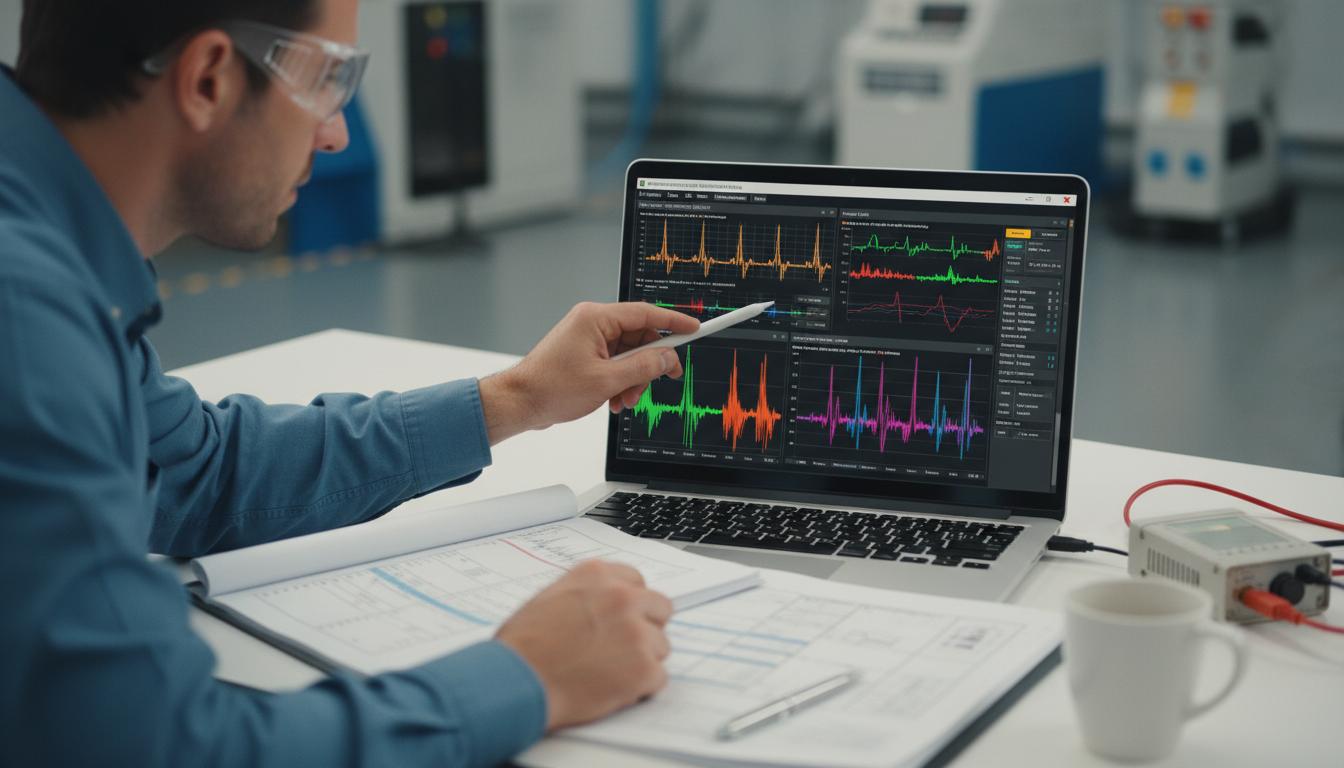
Vibration diagnostics for industrial equipment and wind turbines
Assessing rotating and vibration-critical equipment from vibration spectra — for industry and wind power. Deep hands-on experience with wind turbines.
Vibration diagnostics is an instrumental analysis method used to assess the condition of industrial machinery from vibration spectra: detect hidden defects, estimate remaining life, and recommend repair or replacement — often without full disassembly.
EcoTEK provides vibration diagnostics for industrial and energy facilities. Our core expertise is wind turbines (WTGs): see Key focus: wind turbines below; typical industrial assets are also listed, with turbine subsystems described in detail.
From accelerometer data, specialists detect bearing defects, gear mesh issues, imbalance, and misalignment, and provide recommendations for repair and maintenance.
EcoTEK specialists use professional hardware and software from leading vendors; for wind turbines we bring deep experience inspecting nacelles, gearboxes, and generators under real operating conditions.
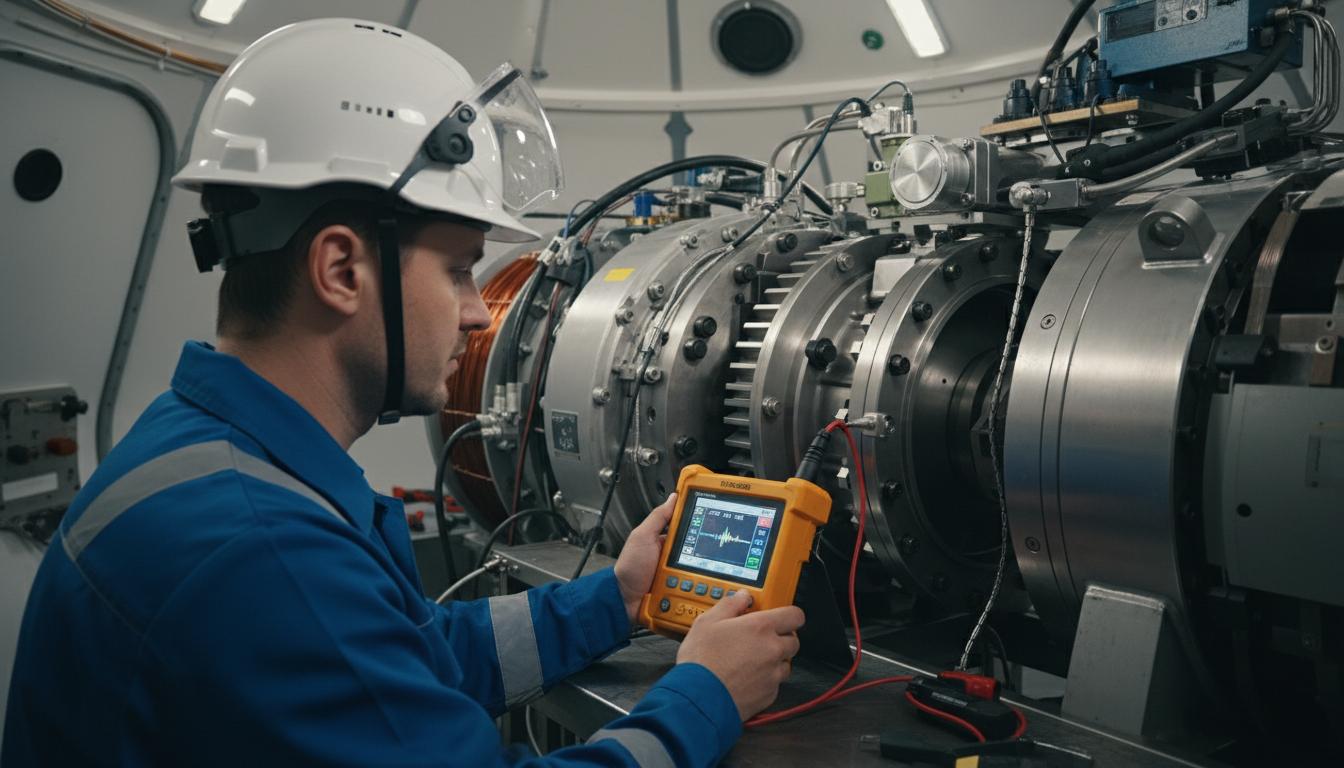
Vibration diagnostics applies to pumps and compressors, fans, motors and generators (including large turbogenerators), gearboxes and multipliers, process trains where vibration and rotor dynamics are critical. The goal is to detect wear, loosening, misalignment, and developing faults before failure.
On a wind turbine, vibration control focuses on critical subsystems; below are the main inspection targets.
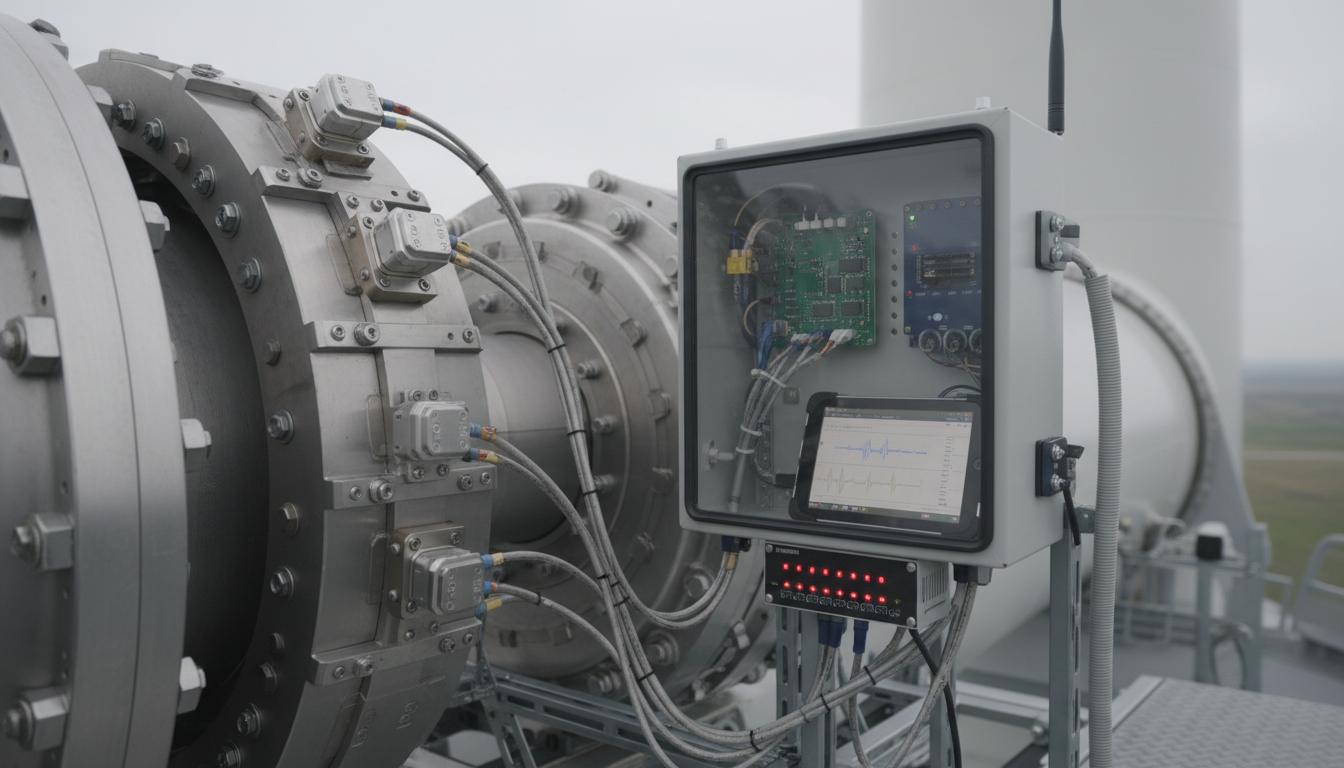
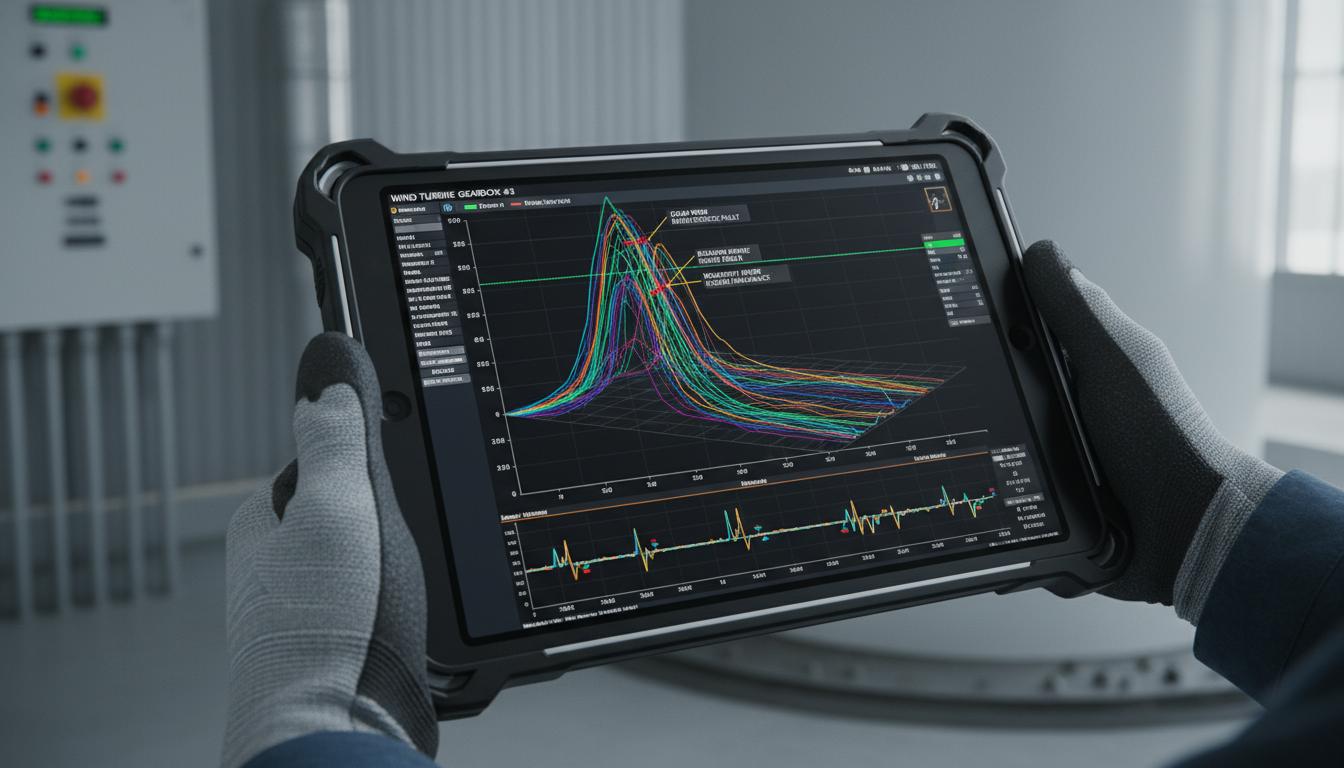
EcoTEK specialists can perform technical analysis of your existing monitoring system or help design measurements on critical components. Using dedicated software, vibration levels are tracked in real time; on critical events the customer is notified and the turbine is inspected.
This is the most advanced approach to track defect progression and estimate remaining component life.
Preventing catastrophic failures. Gearbox or generator destruction is among the worst outcomes. Vibration monitoring helps catch developing faults early, when they can still be addressed with planned repair.
Lower maintenance costs. Moving from time-based maintenance to condition-based maintenance — servicing only assets that actually need work.
Higher availability and energy yield. Fewer unplanned outages directly improve project economics.
We offer vibration diagnostics for industrial equipment and wind turbines across Belarus, Kazakhstan, and Russia. For a consultation call +375 (29) 747-07-09 (+7 (967) 351-67-68), email info@ecotek.pro, or use the contact form.
It is instrumental analysis of vibration from bearings, gearboxes, rotors, and other components to assess condition without full disassembly. On wind turbines, typical targets include the main bearing, gearbox, generator, yaw system, and rotor. EcoTEK performs measurements and interpretation according to industry practice and customer requirements.
Main objects: main bearing, gearbox (multiplier), generator, yaw system, rotor (blades and hub). We monitor bearing wear, imbalance, shaft alignment, and gear tooth defects.
Online monitoring uses continuous sensors on critical WTG components with real-time data streaming to an analysis system — ideal for tracking defect evolution.
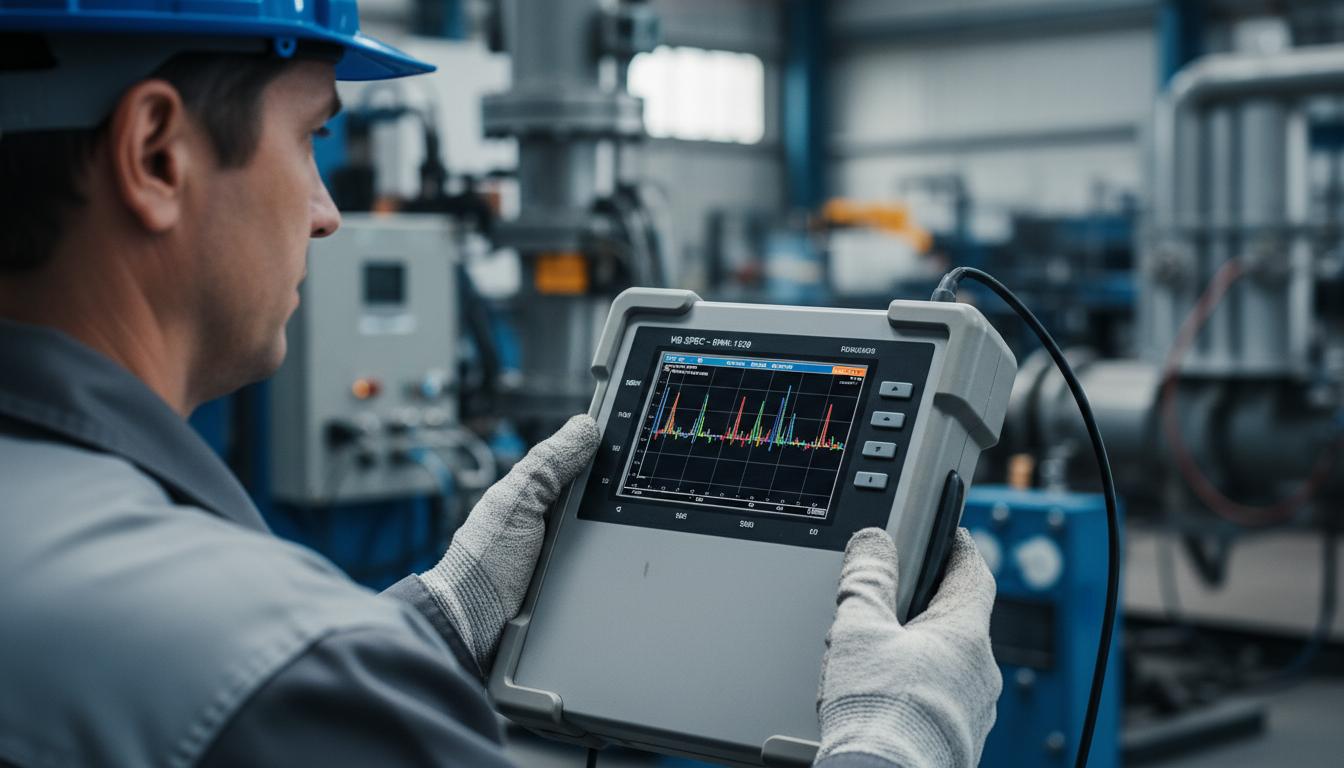
Periodic inspection is a site visit with a portable analyser at defined measurement points, often within planned maintenance.
For industrial assets, frequency follows plant procedures, standards, or OEM guidance (often at least annual for critical trains). For WTGs it follows manufacturer requirements and operating mode; with online monitoring, signals are tracked continuously, 24/7.
Measurements are often taken on running equipment to capture spectra at operating conditions. A shutdown may be needed for safe sensor placement or access. Conditions are agreed when planning the visit.
Accelerometers, portable analysers, and specialised software for spectral analysis. EcoTEK uses professional equipment and software from leading manufacturers.
On a WTG, measurements are taken in the nacelle at height, with access to gearbox and generator, safety constraints, and typical turbine operating modes (ramp-up, rated power). Spectral methods are similar to industrial gear trains, but measurement context and access are turbine-specific — where wind farm experience matters.